
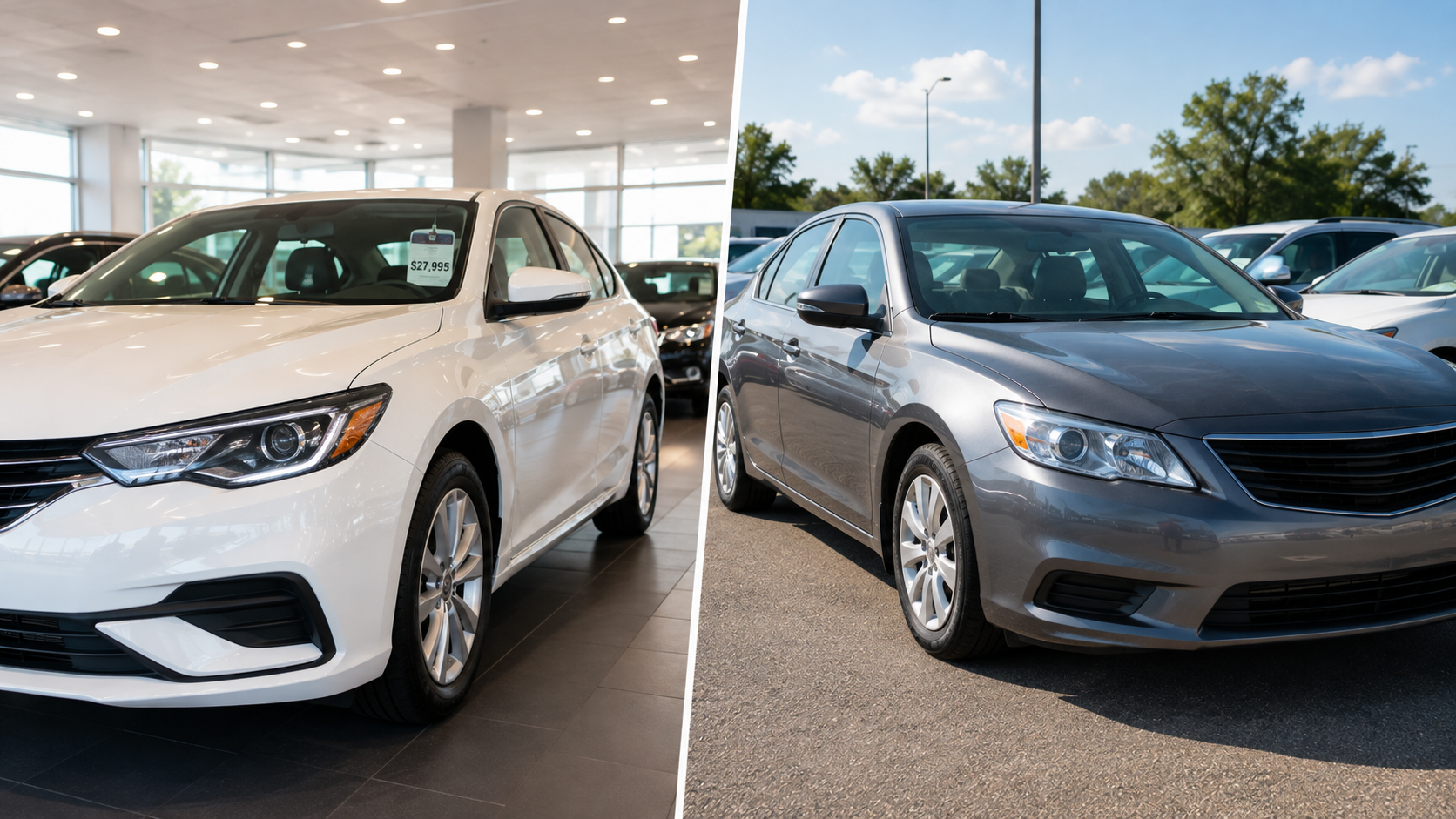

You’re trying to decide whether to buy new or used in New Jersey. In 2026, that decision comes down to a roughly $16,300 price gap between new and lightly used vehicles, a financing rate spread of about three and a half points, and New Jersey’s no-fault insurance rules, which push your premium higher before you even pick a car.
You’ll also run into New Jersey’s flat, weight-based registration fee. It doesn’t shrink just because your car is used, so that part of the math stays neutral either way.
Here’s the 2026 framework, the real numbers behind it, and the verdict you can act on today.
Quick answer: Should you buy new or used in New Jersey? In 2026, the honest answer favors used for most buyers. A two to four year old used car costs you less upfront, insures cheaper, and skips the roughly 23.5 percent first-year depreciation hit new cars absorb. New still wins if you want full factory warranty, plan to keep the car past eight years, or qualify for a promotional low-APR rate.
| Factor | New Car | Used Car (2 to 4 Years Old) |
|---|---|---|
| Average price (2026) | About $48,900 | About $32,600 |
| First-year depreciation | About 23.5 percent | Already absorbed by the first owner |
| Average APR (June 2026) | About 7 percent | About 10.5 percent |
| NJ registration | Flat, weight-based fee | Same flat fee as new |
| NJ insurance | Typically higher | Typically lower |
| Warranty | Full factory coverage | May have coverage remaining |
| Best for | Latest tech, long-term keepers | Lower total cost, wider selection |
New Jersey’s flat registration fee changes the math more than you’d expect, since it doesn’t reward buying used the way price and insurance do.
Why Depreciation Decides Whether You Should Buy New or Used
Depreciation determines more of your total car-buying cost than the interest rate on your loan does. Edmunds’ 2026 transaction data shows new vehicles lose an average of 23.5 percent of their MSRP within the first year of ownership, and roughly 60 percent of that value by year five.
Buy a two to four year old version of the same model and someone else has already absorbed that drop. Edmunds itself flags the three-year mark as the start of a “sweet spot,” where a used vehicle has cleared the steepest part of the curve but still has years of useful life left.
Here’s what that looks like over five years, using Edmunds’ published depreciation curve:
- New Car ($48,900): Loses an estimated $29,300 in value over 5 years.
- 3-Year-Old Used Car ($32,600): Loses an estimated $11,400 in value over 5 years.
- Your Net Savings: ~$17,900 preserved in your pocket.
This is an illustrative estimate built on Edmunds’ published depreciation curve, not a quote for a specific vehicle. Your actual numbers will move with the make, model, and mileage, but the direction holds across nearly every mainstream vehicle: the earlier you buy into the depreciation curve, the more of it you personally pay for.
Pro tip: When you check a used car’s price at Carz4Us, ask to see its CARFAX report before you negotiate. A documented ownership history tells you whether the depreciation curve you’re buying into is a normal one or a red flag.
The New Jersey Cost Angle: Insurance, Not Registration, Is Where Used Cars Win
Three separate New Jersey costs shift depending on whether you buy new or used: insurance, registration, and sales tax. Here’s how each one actually moves.
1. Insurance
A less expensive used car is generally cheaper to insure than its new counterpart, since insurers price premiums partly on replacement value. New Jersey adds a structural factor on top of that: it’s a no-fault state, which means personal injury protection is bundled into every policy regardless of who caused the accident.
AAA’s national Your Driving Costs study puts full-coverage insurance for a medium sedan at roughly $2,027 a year and a compact SUV at roughly $2,028 a year, based on standardized five-top-selling-model averages. Because of the no-fault requirement and higher-density traffic risk, New Jersey drivers typically land above that national benchmark, and the gap widens further with a higher-value new vehicle in the mix.
2. Registration
The New Jersey Motor Vehicle Commission (MVC) bases passenger vehicle registration fees on weight class and model age, not purchase price. The actual brackets show how small the age adjustment really is:
| NJ Weight Class | Vehicle Type | Model Age | Base Fee |
|---|---|---|---|
| Class 7 | Under 3,500 lbs (sedans, compact SUVs) | Older than 2 years | $46.50 |
| Class 7 | Under 3,500 lbs | Within 2 years | $59.00 |
| Class 8 | Over 3,500 lbs (larger SUVs, trucks) | Older than 2 years | $71.50 |
| Class 8 | Over 3,500 lbs | Within 2 years | $84.00 |
That data comes straight from the MVC’s published fee schedule. The only age-based adjustment is whether a vehicle is within its first two years or older, a flat $12.50 difference, and it applies no matter what the car cost. A $50,000 new sedan and a $25,000 used sedan in the same weight class pay the identical fee once both clear that two-year window. Senior citizens 65 and older, and drivers with a qualifying disability, get a further $7 discount on any passenger category, and zero-emission vehicles carry a separate annual surcharge on top of the base fee.
3. Sales Tax
New Jersey’s 6.625% sales tax applies to new and used purchases alike, but it’s proportional to price. On the roughly $16,300 gap between the average new and three-year-old used vehicle, that’s about $1,080 less tax for you as the used buyer, before a trade-in credit reduces the taxable base further. Our complete guide to buying a used car in NJ breaks down the full out-the-door math.
Financing: Where New Cars Sometimes Win
New car loans carried an average APR of about 7 percent in June 2026, according to Edmunds, while used car loans averaged 10.5 percent. That roughly three-and-a-half-point spread sounds like it should favor new cars every time. Run the actual numbers, though, and the smaller used-car loan balance doesn’t always win on total interest the way you’d expect.
Here’s a real side-by-side, using a $34,000 new SUV against a three-year-old version of the same model at $23,500, both financed over 60 months with 10 percent down:
- New SUV ($34,000 loan at 7.0% APR / 60 months): Monthly payment ~$606; total interest paid over 5 years ~$5,755.
- 3-Year Used SUV ($23,500 loan at 10.5% APR / 60 months): Monthly payment ~$455; total interest paid over 5 years ~$6,126.
The used loan’s smaller balance doesn’t offset its higher rate here: you’d actually pay more total interest on the used SUV than the new one. See the full breakdown, including depreciation and insurance, in the buyer comparison below.
Manufacturers also run promotional financing that used cars can’t match. At Carz4Us, you can pre-qualify online with no impact to your credit score, which makes it easy to compare your real used-car rate against any new-car promotional offer before you commit. Run the out-the-door price, not the monthly payment, through both scenarios.
What About Maintenance and Repairs?
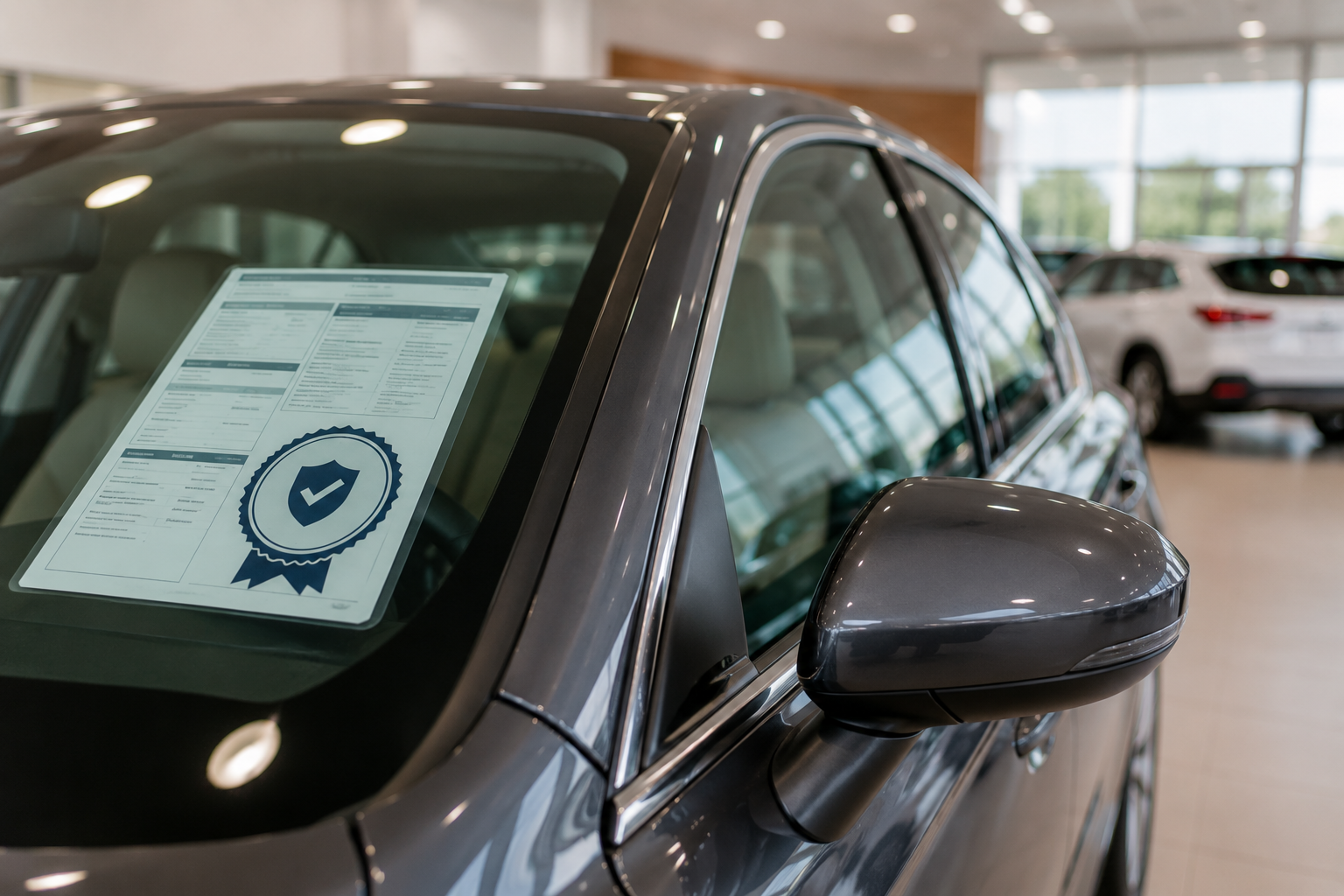
The standard worry about buying used is inheriting someone else’s repair bills. A two to four year old vehicle is typically still inside its cheapest maintenance years, and the real risk isn’t the car’s age. It’s undocumented history.
- Verify Service Records: A complete service record tells you whether you’re buying routine upkeep or deferred maintenance. Every Carz4Us listing includes a free CARFAX so you can check before you buy.
- Check Remaining Factory Warranty: Many two to four year old vehicles still carry remaining factory powertrain coverage. Verify what transfers to you before you finalize.
- Inspect Wear-and-Tear Items: Tires, brakes, and battery health tell you more about near-term costs than mileage alone.
An Illustrative Buyer Comparison
Consider a Pine Brook shopper cross-shopping that same new compact SUV at $34,000 against a three-year-old version at $23,500. This is an illustrative scenario built to show the mechanics, not a record of an actual sale. Here’s the full picture, loan cost plus depreciation and insurance, side by side:
| Factor | New SUV ($34,000) | 3-Year Used SUV ($23,500) |
|---|---|---|
| Monthly Payment (60 mo. / 10% down) | ~$606 | ~$455 |
| Total Loan Interest over 5 Years | ~$5,755 | ~$6,126 |
| Est. 5-Year Depreciation | Highest first-year hit, ~23.5% in year one | Already absorbed by the first owner |
| NJ Insurance | Typically higher | Typically lower |
Even though the used SUV pays slightly more loan interest, its lower purchase price, slower depreciation, and cheaper insurance still add up to a lower total cost of ownership.
This is exactly why you should run the total cost, not just the monthly payment or the loan interest alone, before you decide.
The 2026 New Jersey Market
Used car prices have eased from their pandemic-era peak, and late-model, low-mileage inventory, the two to four year old sweet spot, is more available than it was two years ago. Here’s the current gap:
- Average new vehicle price: ~$48,899
- Average 3-year-old used vehicle price: ~$32,553
- Your upfront market savings: ~$16,346
Edmunds’ own analysis of the current market lands on the same conclusion year after year: a two to four year old used vehicle sits in the current value sweet spot. New Jersey’s no-fault insurance structure only strengthens that case for local buyers.
One category where the used-car math can get even stronger is electrified vehicles. EVs are the clearest example. A 2026 iSeeCars depreciation analysis found that electric vehicles lose an average of 57.2 percent of their value over five years, compared with the 41.8 percent overall vehicle average. That can create substantial discounts if you’re considering a two to four year old EV. Hybrids retain their value better, so savings vary by model.
EV buyers, watch two things: New Jersey charges an annual zero-emission vehicle surcharge on top of the base registration fee. Before you buy a used EV, ask for a battery state-of-health reading, since that number matters more than mileage for resale value and remaining range.
If a fuel-efficient SUV is on your list, our CR-V Hybrid vs. RAV4 Hybrid comparison covers two of the most popular options.
Should I Buy a New or Used Car in New Jersey?
Buy new if:
- You want the newest safety tech and infotainment, still under full factory warranty.
- You plan to keep the car eight or more years, past the point where depreciation matters.
- You qualify for a truly low promotional APR the used market can’t match.
Buy used if:
- You want the lowest total cost of ownership, not just the lowest monthly payment.
- You’re comfortable buying a two to four year old car with a documented history.
- You want the widest selection of trims, years, and price points.
If you’re still weighing whether to buy new or used, start with a documented-history used vehicle at a price you can verify:
- Comparing trims? See our Honda CR-V Hybrid vs. Toyota RAV4 Hybrid comparison.
- Want more options? Check our used Toyota buyer’s guide.
- Choosing a dealer? Read our choosing a NJ used car dealer guide before you visit a lot.
For most New Jersey shoppers, the numbers point the same direction: a two to four year old used car costs you less to buy, less to insure, and depreciates slower from here, while the flat registration fee keeps that part of the equation neutral either way.
The Middle Path: What About Certified Pre-Owned?
There’s a third option between new and used: certified pre-owned. CPO is a franchise-dealer program, a manufacturer-backed inspection and extended warranty on late-model used vehicles, priced at a premium over a comparable non-certified car.
- Choose CPO if: Warranty coverage matters more to you than price, and you want manufacturer-backed inspection standards.
- Choose traditional used if: Total cost matters more than certification, and you’re comfortable verifying history yourself with a clean CARFAX and an independent pre-purchase inspection.
Our certified pre-owned vs. traditional used comparison runs the full cost math on both paths.
Find Your Next Used Car at Carz4Us
Carz4Us stocks used vehicles across two northern New Jersey locations, and every vehicle comes with a free CARFAX report so you can verify the ownership history before you visit. You can pre-qualify online with no impact to your credit score, and Carz4Us works with all credit profiles.
- South Hackensack: 368 Main Street
- Pine Brook: 20 US-46
- Hours: Monday through Saturday, 10am to 7pm, closed Sundays
- Phone: (855) 227-9487
Browse used cars in NJ online, or call to ask what’s in stock today. For the full step-by-step process, from setting a budget to closing the deal, see our complete guide to buying a used car in NJ, and run through our used car buying checklist before you sign anything.
Frequently Asked Questions
Is it cheaper to buy new or used in 2026?
Used is still generally cheaper upfront and over time, mainly because a used car has already absorbed most of the steepest depreciation, the roughly 23.5 percent hit new cars take in year one according to Edmunds. New only closes the gap with a strong promotional APR or ownership stretching past eight years.
Do used cars cost less to insure in New Jersey?
Often, yes. A lower-value car is typically cheaper to insure since insurers weigh replacement cost, and New Jersey’s no-fault law adds baseline cost to every policy regardless of the vehicle. Registration is based on weight and age rather than price, so it barely shifts between a new and used version of the same car.
Is a two to four year old car a good buy?
Yes, it’s widely considered the value sweet spot. A car in that age range has already absorbed the steepest first-year depreciation while often retaining some factory warranty coverage. Edmunds points to this window as the best balance of price and reliability in the current 2026 market. Verify remaining coverage before you finalize the purchase.
How much more do used car loans cost than new car loans?
Edmunds reported average APRs of 10.5 percent for used car loans versus 7 percent for new car loans in June 2026, a spread of roughly three and a half points. Because loan terms and amounts vary, run the full monthly payment and total interest for your specific numbers before assuming the smaller balance always wins on interest.
How much does registration cost for a used car in New Jersey?
New Jersey bases registration on vehicle weight class and whether the model is within its first two years, not on price. A used sedan under 3,500 lbs older than two years pays $46.50, the same as a new sedan in that weight class once it clears the two-year mark.