


If you’re searching for how to buy a used car in NJ, you already know the basics. You’ve watched the videos. You’ve read the national guides from KBB and Edmunds. You still feel like you’re missing something.
You’re right.
Here’s what actually happens to unprepared NJ buyers in 2026:
- Hidden Fees & Bad Financing: You fall for a monthly payment number that looks manageable, then sign paperwork that adds $2,000 or more to a price you thought you’d already negotiated.
- Hidden Rust: You skip the undercarriage inspection because the car looks clean on the surface.
- False Security: You assume the NJ inspection sticker means the car is mechanically sound. It doesn’t. Within eighteen months, you realize you owe more on the car than it’s worth.
This guide exists because that story plays out in North Jersey more than it should. Buying a used car in New Jersey is different in ways most other states simply don’t have. Road salt does things to brake lines and frames that buyers from warmer markets don’t think to check.
NJ’s state inspection looks only at emissions. It will pass a car with worn-out brakes and a corroded undercarriage without blinking. And clean, well-priced inventory in Bergen, Morris, and Passaic counties moves so fast that arriving without financing in place can cost you the car.
This is the guide that covers all of it.
Buying a used car in New Jersey involves eight steps: set a real out-the-door budget including 6.625% sales tax and registration, sort your financing before you shop, choose the right vehicle for NJ conditions, vet the dealer, inspect for rust and mechanical issues, ask the right questions, negotiate on the total price, and complete your NJ MVC paperwork. New Jersey’s emissions-only inspection makes an independent pre-purchase inspection especially important.
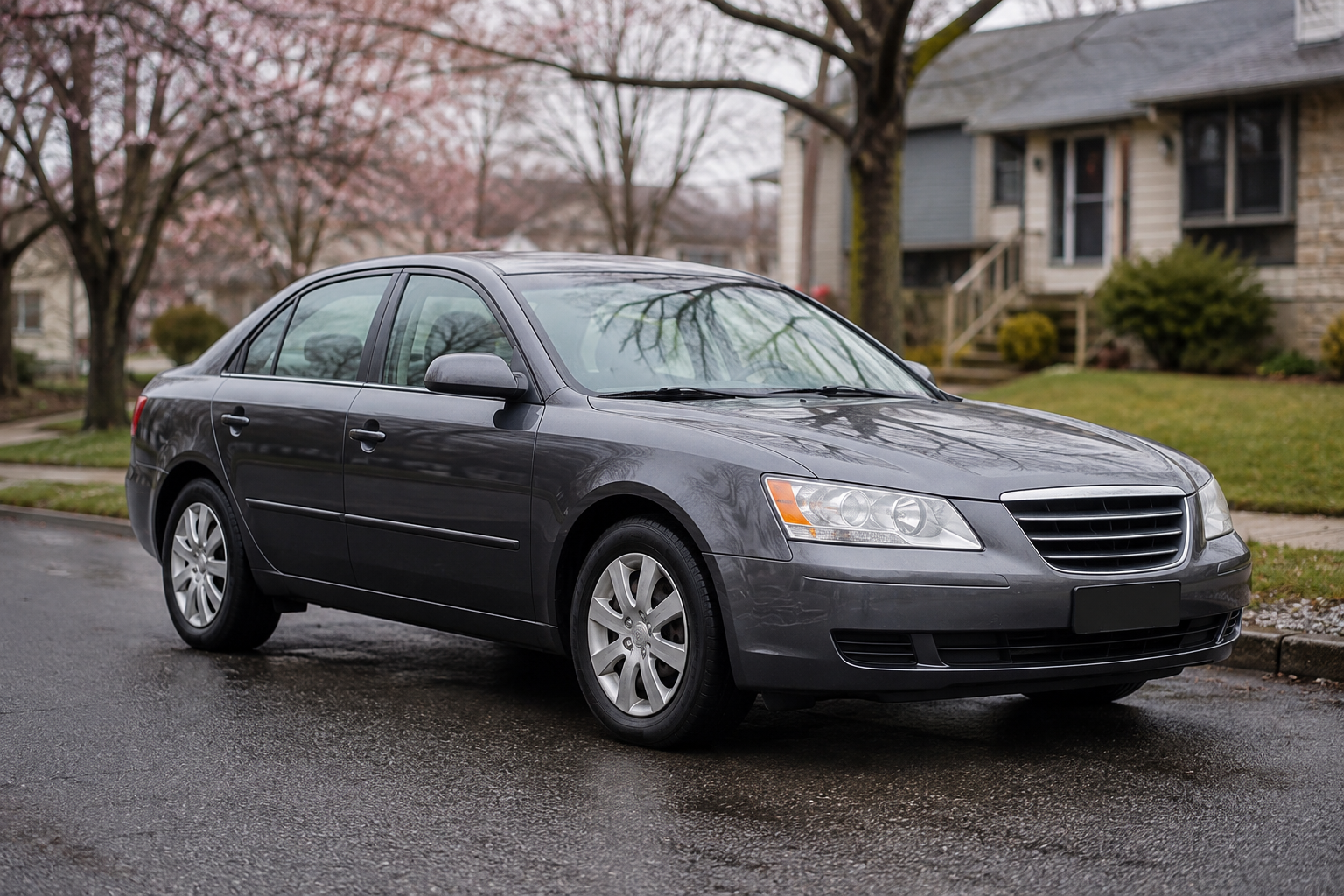
What You Need to Know First
- Set a budget that includes NJ sales tax, registration, and insurance. Not just the sticker price.
- Sort your financing first so you can move when the right car appears.
- Shop on documented history, not just price. Every Carz4Us listing includes a free CARFAX.
- Inspect the undercarriage specifically. NJ winters corrode brake lines on cars that look perfect on the surface.
- Negotiate on the total out-the-door number. Not the monthly payment. Never the monthly payment.
What you’ll hear from buyers who’ve already been through this: the most repeated complaint is some version of, “I did all my research and still got surprised at the desk.” The surprise is almost always the same: fees you didn’t know to ask about upfront, a monthly payment negotiation that obscured the actual purchase price, or a mechanical issue NJ’s inspection had no obligation to catch. This guide addresses all three directly.
3 Things NJ Used Car Guides Always Miss: Read These First
Before the step-by-step process, here’s what separates buying a used car in New Jersey from buying one anywhere else. These three realities appear nowhere in national guides, and they’ll change every decision you make.
01. Road salt is a budget line item
A garaged car and one that sat outside all winter look identical until you put them on a lift. Brake lines, fuel lines, and truck frames corrode from November through March, every year in New Jersey. Always request an undercarriage inspection before you buy.
02. NJ’s inspection won’t protect you
New Jersey’s vehicle inspection checks emissions only, via OBD-II scan. It does not evaluate brakes, tires, steering, or suspension. A car can pass the state inspection and still need $2,000 in mechanical work. An independent pre-purchase inspection is still essential, regardless of the inspection sticker date.
03. Clean cars in North Jersey sell in days
In the Bergen, Morris, and Passaic corridor, a well-documented car at a fair price disappears within days of hitting a lot. Arriving without financing in place means “sleeping on it” often costs you the vehicle. Pre-qualify before you shop, not after you find the car.
National guides from KBB, Edmunds, and U.S. News cover the buying process well. None of them cover New Jersey specifically. Keep these three realities in mind as you move through every step below.
What Documented History Actually Saves You: A Real NJ Example
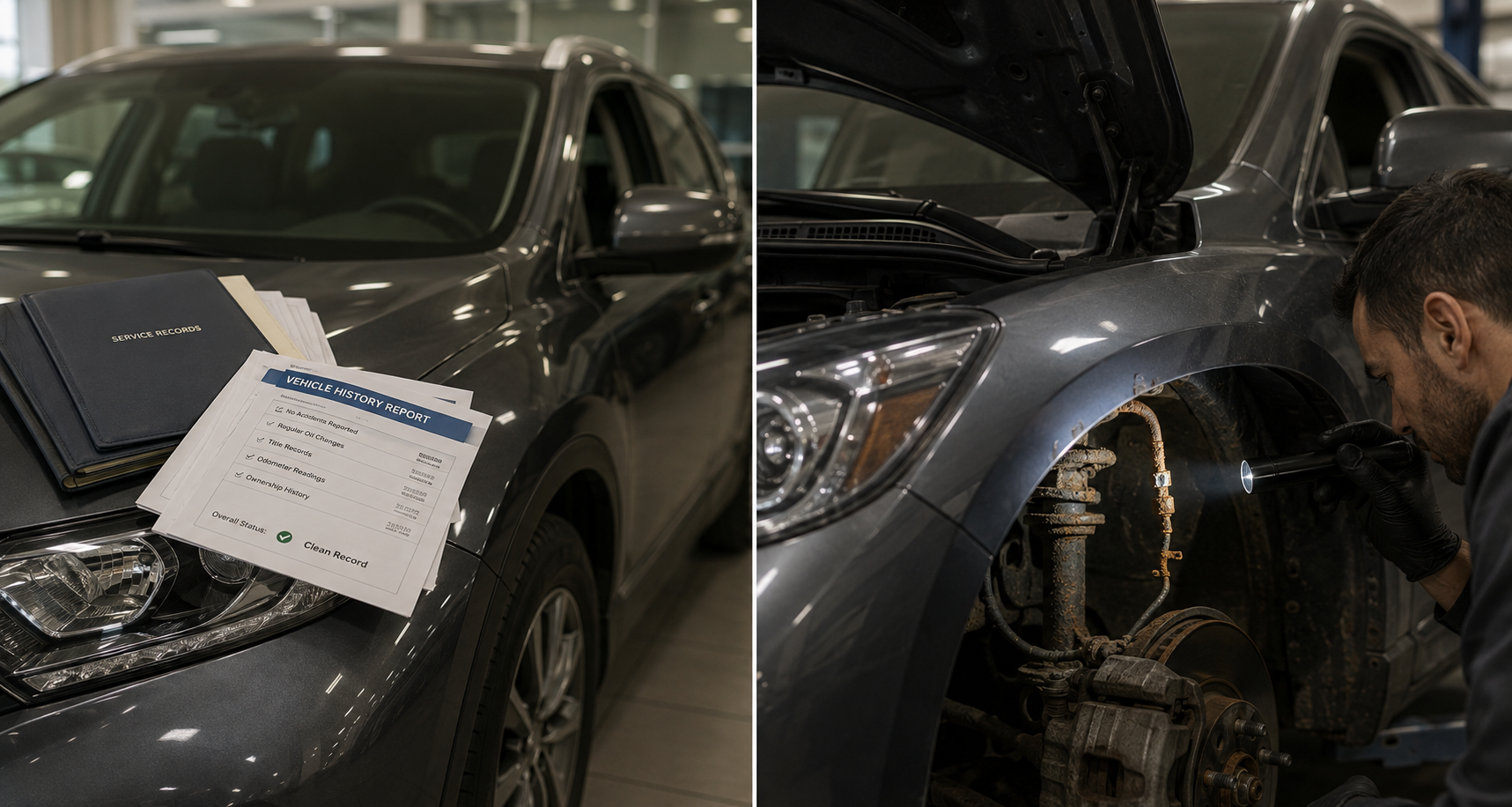
Consider two 2021 Honda CR-V EX models, a scenario that plays out often in the North Jersey used market. Both were listed around $22,000, about 8,000 miles apart on the odometer. The higher-mileage car had full dealership service records, a clean CARFAX, and an undercarriage that passed a pre-purchase inspection without issues. The lower-mileage car had a single-owner record, no service documentation, and visible surface rust on the brake lines.
The buyer chose the higher-mileage car. It was the right call.
Within 60 days, the brake-line condition on the other vehicle had deteriorated enough to require replacement. The repair estimate ran $400 to $800 depending on the shop. The car that looked like the better deal by the numbers was actually the more expensive one.
Documented history beats a lower odometer reading. In the New Jersey salt belt, the difference shows up faster than in any other market. Keep this story in mind when you reach the inspection and negotiation sections below.
Step 1: Set Your Real Out-the-Door Budget
You probably came in knowing the sticker price you can afford. Very few buyers know their actual out-the-door number. That gap is larger than you’d expect, and it can surprise you at the desk when you’re least prepared to push back.
Here’s what adds to that base price:
- NJ Sales Tax: 6.625% on the purchase price, per the NJ Division of Taxation. On a $20,000 car, that’s $1,325.
- Document Fee: Unlike California, which caps doc fees at $85 per the California DMV, New Jersey has no cap. Typical NJ dealer doc fees run $300 to $500, sometimes more.
- Registration Fee: Varies by vehicle weight and model year. Confirm your exact amount at njmvc.gov.
- Insurance: Must be active before the vehicle is registered. Get your quote before you finalize your budget, not after.
- EV Note: Considering a used EV? Budget for NJ’s annual Zero Emission Vehicle fee: $270 through June 2027, rising to $280 in 2027 and $290 in 2028, where it holds per state law.
Ask for the out-the-door number upfront and get it in writing before you negotiate anything else. If you’re trading in a vehicle, New Jersey subtracts the trade-in value from the purchase price before calculating tax. Trading in a $6,000 car on a $20,000 purchase drops your taxable base to $14,000, saving you nearly $400 in tax alone.
NJ Out-the-Door Cost Breakdown: What a $20,000 used car actually costs you in New Jersey
| Fee | Estimated Amount |
|---|---|
| Negotiated vehicle price (your starting point, not the advertised sticker) | $20,000 |
| NJ sales tax, 6.625% (applied to purchase price; reduced if you trade in a vehicle) | $1,325 |
| Title fee (~$60 standard transfer / ~$85 if financing) | $60 to $85 |
| Registration fee (paid to NJ MVC; varies by vehicle weight, model year, and county; confirm at njmvc.gov) | Varies |
| Dealer doc fee, no NJ cap (ask upfront; typical range $300 to $500+) | $300 to $500+ |
| Estimated out-the-door total | ~$21,685+ before registration |
Three more things to build into your budget:
- Registration costs vary by vehicle weight and model year. Confirm your exact amount at njmvc.gov before you finalize your budget. Plan on an additional $1,685 or more on top of a $20,000 sticker price before registration is even applied.
- NJ car insurance runs above the national average. According to NerdWallet’s 2026 analysis, full coverage in New Jersey averages $320 per month, well above the national median. Get your quote before you finalize your budget, not after you sign.
- Insurance needs to be active before the vehicle is registered. Lock in your quote before the day you plan to take delivery.
Step 2: Secure Your Financing First
Get this step right and you get the car you want. Skip it, and you can lose that car to someone who was ready when you weren’t.
Clean, well-priced used cars in North Jersey move fast. A service-documented car at a fair price in the Bergen, Morris, or Passaic corridor can disappear within days of hitting a lot. According to Edmunds’ January 2026 data, the average interest rate on a used car loan was 10.5%, compared to roughly 6.6% on new car loans. Knowing your real rate before you sit down with a dealer gives you a cleaner picture of total cost.
At Carz4Us, you can pre-qualify online with a soft credit check that won’t affect your score, and we work with all credit profiles. Still deciding whether used is right for you? See our guide to certified pre-owned vs. traditional used cars in NJ for a full cost comparison.
Step 3: Choose the Right Vehicle for NJ Conditions
Price and mileage are the two numbers you’re probably fixating on. Neither tells you whether a car will hold up in a New Jersey winter.
- AWD vs. FWD: All-wheel drive (AWD) earns its keep on icy on-ramps and unplowed side streets. If you stick to major, cleared roads, front-wheel drive (FWD) with good winter tires usually does the job. Base it on your commute and county, not the sales pitch.
- Reliability Rating: Reliability matters more in a salt-belt state than anywhere else. Consumer Reports’ 2026 data ranks Toyota and Honda at the top for long-term dependability (Camry, Corolla, CR-V, Civic). RepairPal confirms both brands lead nationally on annual repair costs, and that edge grows in corrosion-prone climates.
If you’re cross-shopping models, start with our detailed comparisons: the Honda Civic vs. Toyota Corolla for compact sedans and the CR-V Hybrid vs. RAV4 Hybrid if a fuel-efficient SUV is on your list. For Toyota shoppers specifically, our guide to best used Toyotas under $20K covers the models with the most documented longevity at realistic North Jersey price points.
Step 4: Vet the Dealer as Carefully as the Car
Where you buy shapes the entire transaction. A good dealer makes the process clear. A poor one makes it deliberately opaque, and the fee surprises at the desk are structural, not random.
Check these four things before you commit to a lot:
- Vehicle-history reports on every listing, not just on request. A dealer who provides CARFAX as standard practice has nothing to hide.
- Transparent out-the-door pricing. The advertised price and the final number should be close.
- Independent reviews from NJ buyers. Google and Dealer Rater reviews from buyers in Bergen, Morris, and Passaic counties tell you more than testimonials on the dealer’s own site.
- NJ dealer license. Confirm the dealer is licensed with the New Jersey Motor Vehicle Commission before you hand over any personal information.
Our full guide to choosing a reliable NJ used car dealer covers every green and red flag in detail. (Internal link pending slug confirmation.)
Step 5: Inspect the Car: Focus on the Undercarriage Specifically
NJ’s salted winters make the undercarriage the single most important thing you check. If you’re used to shopping in a warmer state, you’ve probably never had to think about this, but a car that gleams on the outside can have brake lines that are weeks away from failure. See the CR-V example above.
- The Undercarriage Check: Brake lines, fuel lines, and on any truck or SUV the frame itself are all vulnerable to accelerated corrosion from road salt applied November through March. Most national buying guides skip this because it’s not a problem in most markets. In New Jersey, it’s the problem. Beyond the undercarriage, check panel gaps and paint for evidence of prior collision repairs, tires for even tread wear, fluid levels and condition, and all interior electronics. On any hybrid or EV, request a battery state-of-health reading.
- The Test Drive: Start the car cold if possible, since some issues only appear before the engine warms up. Reach highway speed to check for vibration or transmission hesitation. Brake firmly in a safe space to feel for pulling or pulsing. Drive the first few minutes with the radio off.
- Check Recalls: Run the VIN through NHTSA’s recall lookup at nhtsa.gov/recalls before any test drive. Open recalls are repaired at no cost at any franchised dealer for that brand, but you want them completed before you buy, not discovered after.
- Ask the Key Question: “Can I arrange an independent pre-purchase inspection?” A trustworthy dealer welcomes it. Resistance to that request tells you what you need to know.
Our used car buying checklist has every inspection and test-drive point in a printable, phase-by-phase format. (Internal link pending slug confirmation.)
Step 6: Ask the NJ-Specific Questions Sellers Rarely Volunteer
- “Has the undercarriage been inspected for salt corrosion?” Not every dealer does this as part of reconditioning. A car that looks clean on the surface can have compromised brake lines underneath. Ask directly and watch the answer, not just what they say.
- “What is the vehicle’s current inspection status?” NJ’s inspection is emissions-only and runs on a two-year cycle after the initial five-year exemption for newer vehicles. Knowing where the car sits in that cycle tells you when you’ll owe another visit to the MVC.
Keep the full list of questions to ask before buying a used car in NJ on your phone when you’re at the lot.
Step 7: Negotiate on the Total Number, Not the Monthly Payment
This is the step where you either save the most money or lose it. It’s also where dealers have the most structural advantage if you let them set the terms of the conversation.
Negotiate on the total out-the-door price. Not the monthly payment.
A low monthly payment is easy to engineer by extending the loan term. A 72-month loan on a $22,000 used car at 10.5% costs roughly $3,900 more in interest than the same loan at 60 months. The monthly payment looks better. The total cost is worse.
The longer the term, the longer you’re underwater on the vehicle. That means if anything goes wrong before you’ve paid down enough principal, you’re stuck.
Why Payment-Focused Deals Cost More: The real cost of negotiating on monthly payments, Edmunds Q1 2026
| Stat | What It Means |
|---|---|
| 30.9% | Of trade-ins in Q1 2026 involved owners owing more than their car’s value (highest share since Q1 2021) |
| $7,183 | Average amount underwater on those trade-ins, a record high (mostly stems from extended-term loan negotiations) |
Negotiate on the out-the-door total, not the monthly payment. A lower payment engineered by a longer loan term means you pay more interest, build less equity, and risk carrying negative equity into your next purchase. That’s the exact pattern behind roughly 1 in 3 trade-in owners going underwater in 2026.
Get the full out-the-door number in writing before you agree to anything. A fair dealer gives you time to read what you’re signing. Any deadline you cannot independently verify is not real.
Step 8: Complete Your NJ Paperwork Correctly
Here’s what you need to know before you sign:
- No “Cooling-Off” Period: New Jersey has no 3-day right to cancel a vehicle purchase. Once you sign at the dealership, the contract is binding. This is exactly why everything in Steps 1 through 7 happens before you sign, not after.
- Insurance Requirement: Have proof of insurance in place before the vehicle is registered. Add the vehicle to your policy before you sign, not after.
When you buy from a licensed dealer, the dealer handles the title transfer, sales tax collection, and registration filing with the NJ Motor Vehicle Commission (MVC).
The NJ Used Car Lemon Law: The Protection You Probably Don’t Know You Have
New Jersey is one of the few states with a lemon law specifically for used cars, and you’ve probably never heard of it. Under the law, licensed dealers must provide a written warranty on every used car sold for more than $3,000 that is seven model years old or less, has 100,000 miles or fewer on the odometer, and has not been declared a total loss by an insurance company.
The warranty length depends on mileage at the time of sale:
| Odometer at Purchase | Required Dealer Warranty |
|---|---|
| 24,000 miles or less | 90 days or 3,000 miles, whichever comes first |
| 24,001 to 59,999 miles | 60 days or 2,000 miles, whichever comes first |
| 60,000 to 100,000 miles | 30 days or 1,000 miles, whichever comes first |
If the dealer fails to fix the same material defect after three attempts, or the vehicle sits out of service for 20 cumulative days during the warranty period, you may be entitled to a refund of the full purchase price. For vehicles with 60,000 miles or more, you can waive the warranty in writing, sometimes in exchange for a lower price. Think carefully before signing that waiver.
Two things to note: this protection applies only to dealer purchases. Buy from a private seller and none of it exists. It also doesn’t replace a pre-purchase inspection.
The lemon law helps you after a defect surfaces. The inspection stops you from buying the defect in the first place. Full details at the NJ Division of Consumer Affairs Lemon Law Unit.
Find Your Next Used Car at Carz4Us
Knowing how to buy a used car in NJ is half the work. Finding a dealer who makes the transaction clear from the start is the other half. Here’s what you get at Carz4Us:
- Transparent out-the-door pricing, upfront, before you sit down.
- A free CARFAX on every vehicle in our inventory.
- Soft-check pre-qualification, so you know your real rate without affecting your score.
- All credit profiles welcome.
| South Hackensack | Pine Brook |
|---|---|
| 368 Main St, just off Route 46 | 20 US-46, directly on Route 46 |
Monday through Saturday, 10am to 7pm. Closed Sundays.
(855) 227-9487
Frequently Asked Questions
Do I have to pay sales tax on a used car in NJ?
Yes. New Jersey charges 6.625% sales tax on the purchase price of any vehicle, new or used, whether bought from a dealer or a private seller. A dealer collects and remits it as part of the transaction. If you trade in a vehicle, NJ subtracts the trade-in value from the purchase price before calculating tax, which can meaningfully reduce what you owe.
What credit score do I need to buy a used car in NJ?
There is no single minimum. Lenders price loans based on credit score, loan term, and vehicle age. Carz4Us works with all credit profiles, and you can pre-qualify with a soft credit check that will not affect your score to see your real rate before you commit to a vehicle.
Is it better to buy from a dealer or a private seller in NJ?
A dealer handles the title transfer, tax collection, and MVC registration paperwork, and can offer financing and a vehicle-history report. A private sale can sometimes cost less upfront, but verification, paperwork, and any post-sale issues fall entirely on you. If you buy private, you’ll complete the title transfer yourself at an NJ MVC location, pay the $60 title fee ($85 with a lien), and remit the 6.625% sales tax.
How many miles is too many on a used car?
There’s no hard cutoff. Many modern vehicles reach 200,000 miles with consistent maintenance, so documented service history matters more than the odometer reading. A well-maintained 120,000-mile car with full records beats an 80,000-mile car with none. Every Carz4Us listing includes a free CARFAX so you can check the history yourself.
What legal protections and safety checks exist for used cars in NJ?
New Jersey’s vehicle inspection is emissions-only, so it won’t catch worn brakes, tires, steering, or suspension issues. That’s why an independent pre-purchase inspection matters. Separately, NJ’s Used Car Lemon Law requires licensed dealers to give a written warranty (30 to 90 days, based on mileage) on qualifying used cars. Private sales aren’t covered.